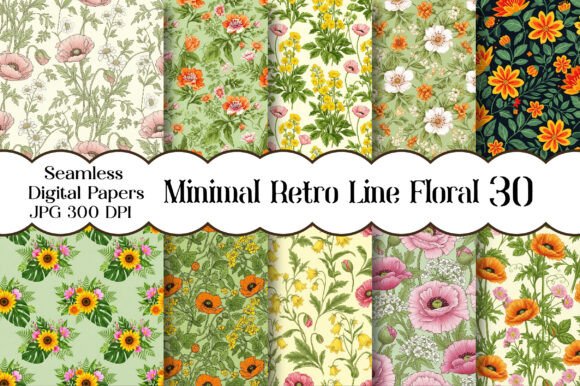
Minimal Retro Line Floral Papers: Bridging Vintage Charm and Modern Design
In an era where digital saturation often leads to visual fatigue, there is a growing appreciation for design elements that offer clarity, nostalgia, and understated sophistication. This shift in aesthetic preference has brought Minimal Retro Line Floral Papers to the forefront of creative resources. These are not merely decorative backgrounds; they represent a deliberate design choice that marries the simplicity of modern minimalism with the warm, human touch of retro illustration. For professionals, entrepreneurs, and hobbyists alike, understanding how to leverage these assets can transform ordinary projects into polished, memorable experiences.
The appeal of line-drawn florals lies in their versatility. Unlike heavy, photorealistic textures or complex vector illustrations, line art relies on negative space and fluid strokes to convey form. This inherent simplicity allows the designs to adapt seamlessly across various mediums without overwhelming the primary content. Whether you are designing a brand identity that needs to feel approachable yet premium, or creating personal stationery that exudes charm, these patterns provide a foundational elegance that rarely goes out of style.
The Resurgence of Nostalgic Aesthetics in Modern Workflows
The current design landscape is witnessing a fascinating paradox: as technology advances toward hyper-realism and 3D immersion, there is a simultaneous counter-movement toward analog-inspired visuals. Consumers and clients are increasingly drawn to materials that feel "hand-crafted," even when the final product is digital. This trend reflects a broader desire for authenticity and human connection in a rapidly automated world.
Minimal Retro Line Floral Papers fit perfectly into this narrative. They evoke the feeling of mid-century botanical sketches or vintage textile prints but are rendered with the clean lines expected in contemporary UI and print design. This duality makes them particularly relevant for businesses looking to differentiate themselves. In a marketplace flooded with generic stock photography, utilizing distinct, stylized line art signals attention to detail and a curated brand voice.
Furthermore, the minimalist nature of these designs aligns with modern user expectations for clarity. In web design and mobile interfaces, clutter is the enemy of conversion. Line floral patterns can serve as subtle background textures that add depth and personality without distracting from call-to-action buttons or key messaging. They offer a way to soften the sterile feel of flat design while maintaining the readability and focus that modern workflows demand.
Practical Applications Across Industries
The utility of high-resolution floral line art extends far beyond simple decoration. Because these files are typically provided at 300 DPI, they are ready for professional-grade printing, making them invaluable for physical products. However, their scalability also makes them ideal for digital environments. Here is how different sectors can integrate these resources effectively:
- Wedding and Event Planning: The wedding industry thrives on themes that balance tradition with modern chic. Minimal retro florals are perfect for invitation suites, menu cards, and signage. They provide a romantic backdrop without the heaviness of traditional baroque patterns, appealing to couples who want a sophisticated but relaxed atmosphere.
- Brand Identity and Packaging: For small business owners and marketers, packaging is a critical touchpoint. Using seamless floral patterns on product boxes, labels, or shopping bags can elevate the perceived value of a product. Think of artisanal soaps, boutique coffee blends, or organic skincare lines where the packaging needs to communicate natural ingredients and careful craftsmanship.
- Digital Content and Social Media: Bloggers and content creators can use these elements to frame quotes, create story highlights covers, or design eBook covers. The neutral palette often associated with line art ensures that text remains legible, adhering to accessibility standards while still looking stylish.
- Interior Decor and Lifestyle Products: The rise of DIY culture and print-on-demand services has made it easier than ever to turn digital assets into physical goods. These floral drawings work exceptionally well on wall art, throw pillows, phone cases, and clothing prints. The "less is more" philosophy of line art ensures these items fit into diverse interior design styles, from Scandinavian to Bohemian.
Technical Considerations for Creators
When incorporating Minimal Retro Line Floral Papers into your workflow, technical quality is paramount. The collection described offers high-resolution JPG files, which is crucial for maintaining crisp edges when scaling up for large format prints like banners or wallpaper. A resolution of 300 DPI ensures that the fine lines do not become pixelated or blurry, preserving the integrity of the hand-drawn aesthetic.
Additionally, the inclusion of seamless patterns is a significant advantage for designers. Seamless tiles allow for infinite repetition without visible breaks, which is essential for web backgrounds, fabric printing, and wrapping paper. This flexibility means you are not limited to a single composition; you can adapt the pattern to fit any canvas size or aspect ratio required by your project. Having access to individual hand-drawn floral elements alongside the patterns further expands creative possibilities, allowing for custom compositions that are unique to your specific needs.
Evolving Creative Practices and User Expectations
The way we consume and create visual content is constantly evolving. Today's audience is visually literate; they can distinguish between mass-produced templates and thoughtfully curated designs. This heightened scrutiny drives the need for assets that feel exclusive and intentional. Minimal retro line art satisfies this demand by offering a look that feels bespoke, even when used as a pre-made asset.
Moreover, the trend toward sustainability in design influences material choices. Line art often requires less ink coverage than solid, heavy graphics when printed, which can be a subtle but meaningful consideration for eco-conscious brands. By choosing designs that rely on线条 (lines) rather than solid fills, businesses can reduce their environmental footprint while achieving a striking visual impact.
For educators and freelancers, these resources also serve as excellent teaching tools or portfolio builders. They demonstrate an understanding of composition, balance, and the effective use of white space. Incorporating such elements into a portfolio shows potential clients that the creator values both aesthetics and functionality.
Strategies for Effective Implementation
To get the most out of these floral collections, consider the following recommendations:
- Maintain Contrast: While line art is subtle, ensure there is sufficient contrast between the lines and the background color. Dark charcoal lines on off-white paper often look more authentic and readable than pure black on pure white.
- Layering Techniques: Don't be afraid to layer these patterns. Placing a faint floral overlay on top of a solid color block or even a textured paper background can create a rich, tactile feel that enhances the retro vibe.
- Contextual Relevance: Choose floral motifs that match the tone of your project. Delicate, sparse lines might suit a luxury spa brand, while bolder, denser retro patterns could work better for a vibrant lifestyle blog or a trendy café menu.
- Cross-Medium Consistency: Use the same floral elements across both your digital and print collateral. This creates a cohesive brand experience whether the customer is viewing your website or holding your business card.
Ultimately, the power of Minimal Retro Line Floral Papers lies in their ability to bridge gaps—between the past and present, the digital and physical, and the complex and the simple. They offer a timeless aesthetic that adapts to changing trends without losing its core identity. For anyone looking to infuse their creative pursuits with a sense of enchanting elegance and professional polish, this collection provides the perfect toolkit. By understanding the nuances of these designs and applying them strategically, creators can produce work that resonates deeply with audiences seeking beauty in simplicity.